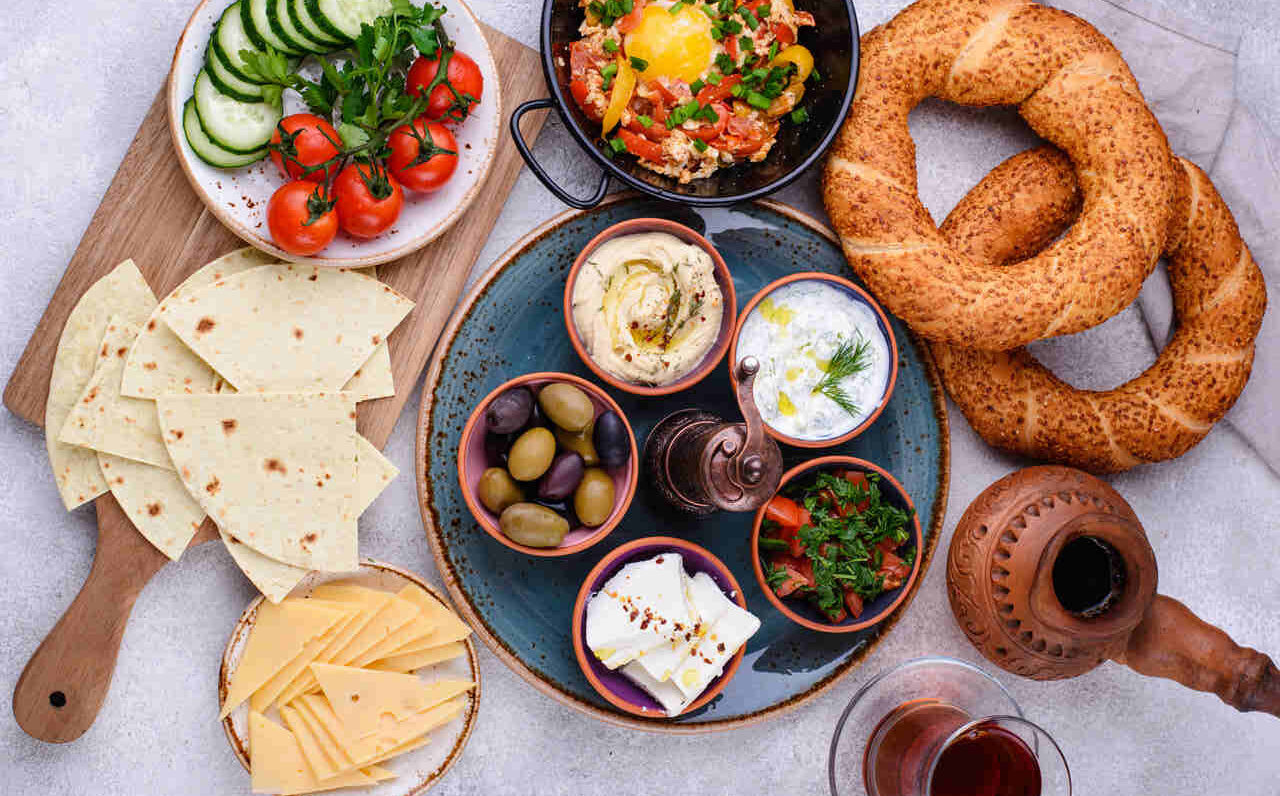
A traditional Turkish breakfast is more than just the first meal of the day; it is a cultural experience built around hospitality, abundance, and flavor.
Known as one of the richest breakfast traditions in the world, the Turkish breakfast table is colorful, satisfying, and full of variety.
Despite its impressive array of small dishes, preparing a traditional Turkish breakfast does not need to take long. With simple planning and practical recipes, it is possible to serve a delightful breakfast table in just one hour.
A typical traditional Turkish breakfast includes cheese, olives, tomatoes, cucumbers, jams, honey, fresh bread, and black tea, as well as hot dishes such as menemen, sucuklu yumurta, or börek.
In this guide, you will find must-have breakfast components, tea brewing tips, practical recipes, and healthy alternatives, all organized for quick preparation without compromising authenticity or flavor.
Traditional Turkish Breakfast: Must-Have Flavors On The Table
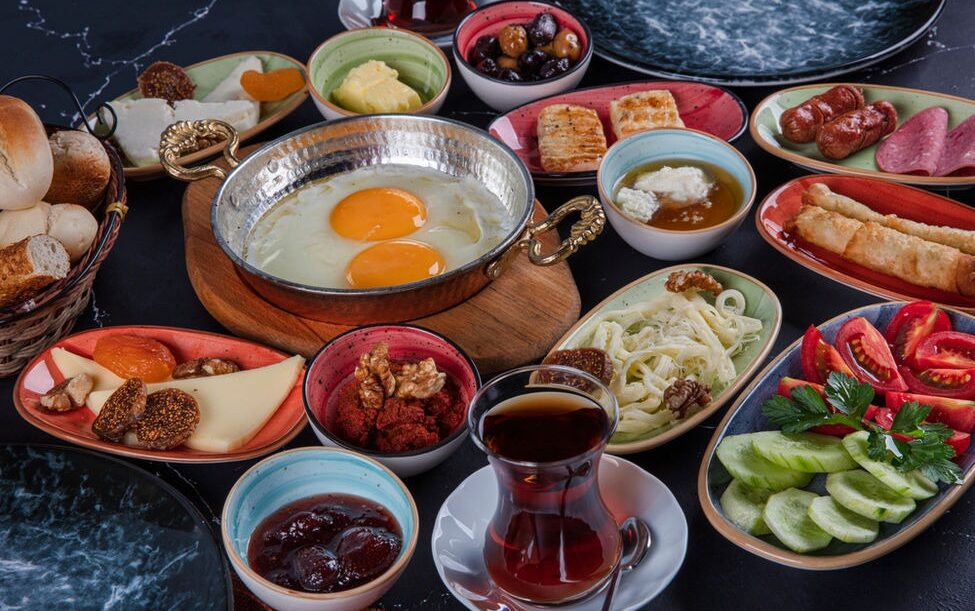
A traditional Turkish breakfast is known for its variety. Each small dish complements the others, creating a balance of sweet and savory flavors. The key to creating an authentic breakfast table lies in selecting quality ingredients and serving them with simplicity.
Cheese is one of the essentials. White cheese, similar to feta, is the most common choice, while kasar cheese, tulum cheese, and lor cheese are also frequently served. Each has a different texture and flavor, making cheese an important part of a traditional Turkish breakfast.
Olives are another core element. Both black and green olives are served, often marinated with olive oil, thyme, lemon, or chili flakes for extra flavor. Fresh vegetables such as tomatoes, cucumbers, parsley, and green peppers add color and refreshment to the table.
Bread is always present, whether it is freshly baked loaf bread, simit, or bazlama. Bread pairs perfectly with honey and clotted cream, tahini and grape molasses, or homemade jams. These spreads are iconic and highlight the sweet side of a traditional Turkish breakfast.
Egg dishes and hot additions like grilled halloumi, fried potatoes, or spicy Turkish sausage (sucuk) bring warmth and comfort to the morning meal. Combined together, these elements create a hearty and satisfying breakfast suitable for any occasion.
Tips For Brewing Tea And Creating A Warm Table Atmosphere
Tea is at the heart of a traditional Turkish breakfast. It is not just a drink but a symbol of hospitality, served continuously throughout breakfast. Turkish tea has a unique flavor and is brewed using a special two-tiered teapot known as a çaydanlık.
To brew tea correctly, add loose-leaf tea to the upper pot and pour boiling water over it. Allow it to steep slowly for 10 to 15 minutes. The lower pot contains plain boiling water used to adjust the tea’s strength when serving.
A well-brewed Turkish tea should be ruby-red in color and smooth in taste. Choosing a high-quality tea, preferably from the Rize region, ensures a genuine traditional Turkish breakfast experience.
Serving tea in tulip-shaped glasses is another traditional practice. These glasses not only retain the ideal temperature but also display the tea’s rich color. Presentation is important in Turkish culture, and even the arrangement of tea glasses on the table reflects care and hospitality.
The table setting also plays an important role in enhancing the breakfast experience. Small bowls and plates are used to serve different items neatly, while wooden boards, copper tea kettles, and ceramic plates add authenticity to the presentation.
The atmosphere of a traditional Turkish breakfast should feel warm, inviting, and leisurely. It is a time to slow down, enjoy food, and share meaningful conversations.
Traditional Turkish Breakfast Recipes: Quick And Practical Ideas
Preparing a traditional Turkish breakfast quickly is easy with a few practical recipes. These dishes are easy to prepare, delicious, and full of authentic Turkish flavor.
Menemen is one of the most beloved breakfast dishes. It is made by sautéing tomatoes and peppers, then adding eggs and cooking them lightly. Menemen is rich, flavorful, and takes less than 15 minutes to prepare.
Another classic option is sucuklu yumurta, where eggs are cooked with spicy beef sausage. This dish adds a smoky aroma and pairs perfectly with fresh bread and tea. Sigara böreği is another fast favorite for a traditional Turkish breakfast table.
Made with yufka pastry and filled with feta cheese and parsley, it can be rolled the night before and fried in minutes in the morning. If you prefer something lighter, you can bake mini cheese pastries instead. For a quick spread option, acuka is ideal.
This traditional dip is made with tomato paste, crushed walnuts, olive oil, garlic, and spices. It is savory, rich, and takes less than 10 minutes to prepare. Pair it with toasted bread or simit for a satisfying addition.
These simple recipes allow you to quickly enrich your breakfast table while staying true to the essence of a traditional Turkish breakfast. With just a few ingredients and minimal preparation time, anyone can enjoy an authentic Turkish breakfast at home.
Choosing The Best Cheese, Olives, And Local Products
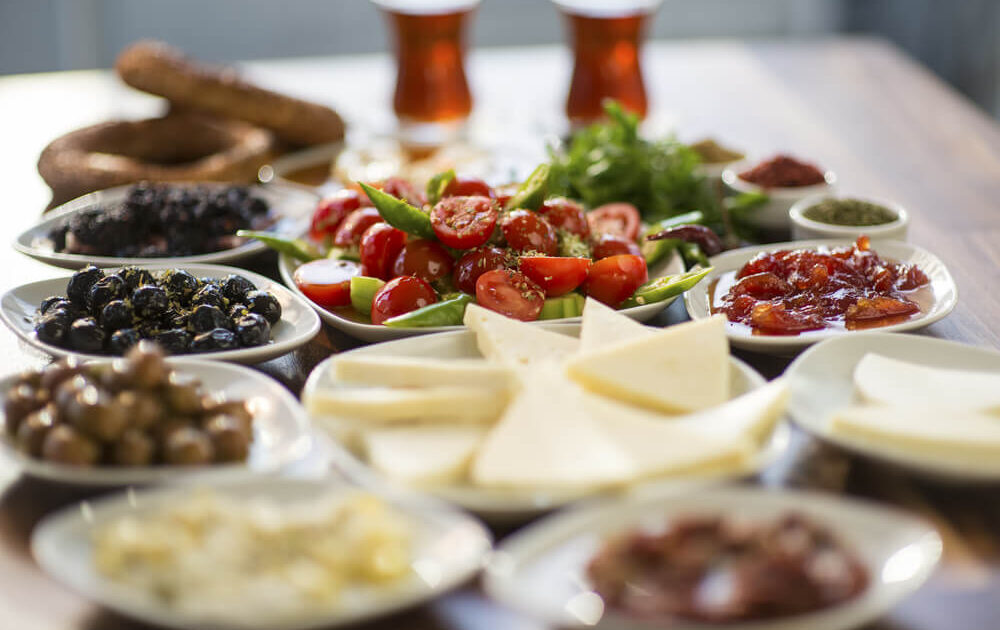
The authenticity of a traditional Turkish breakfast depends largely on choosing high-quality ingredients. Local cheeses, olives, and natural spreads are what make the Turkish breakfast unique and memorable. Cheese selection should include at least two to three varieties.
White cheese is essential, but adding aged kasar or Ezine cheese enhances flavor. Tulum cheese, known for its intense and slightly tangy taste, is another popular choice. These cheeses can be sliced, crumbled, or even drizzled with olive oil and herbs for extra richness.
Turkey is known for its excellent olive production, especially in the Marmara and Aegean regions. Gemlik olives are famous for their dark color and rich taste, while Ayvalık green olives are often marinated for extra flavor.
In a traditional Turkish breakfast, olives are seasoned simply to complement other dishes. Local products like honey, tahini, pekmez, butter, and homemade jams are also essential.
Honey and clotted cream, known as bal kaymak, is one of the most iconic combinations in Turkish cuisine. These products reflect Turkey’s natural richness and deep-rooted culinary traditions, making them indispensable to a traditional Turkish breakfast.
When choosing ingredients, it is best to buy from trusted local producers or farmers’ markets. Natural, minimally processed products always enhance both flavor and health.
Traditional Turkish Breakfast: Healthy Alternatives Without Losing Flavor
A traditional Turkish breakfast is naturally rich and satisfying, but it can also be adapted to suit modern healthy eating habits. With small adjustments, you can make your breakfast lighter without sacrificing taste.
Start by choosing whole grain or sourdough bread instead of white bread to increase fiber intake. Replace processed spreads with natural alternatives such as avocado slices or olive oil-based dips.
Include more fresh vegetables like arugula, lettuce, radishes, and carrots to add color and vitamins to the table. Cheese choices can also be adjusted. Instead of high-fat cheeses, you can serve lor cheese, curd cheese, or light white cheese.
These options still fit the traditional Turkish breakfast style while being easier to digest. Olives can be rinsed to reduce excess salt, and olive oil can be used instead of butter to reduce saturated fat intake.
For protein, boiled eggs are a healthier alternative to fried eggs. You may also include nuts like walnuts or almonds, which are already common in some Turkish regions. Instead of sugary jams, homemade fruit compotes or sugar-free jam alternatives can be served.
With these simple modifications, you can keep the cultural richness of a traditional Turkish breakfast alive while creating a more balanced and healthy meal. The key is to maintain variety, freshness, and authenticity.
See you in the next post,
Anil UZUN